









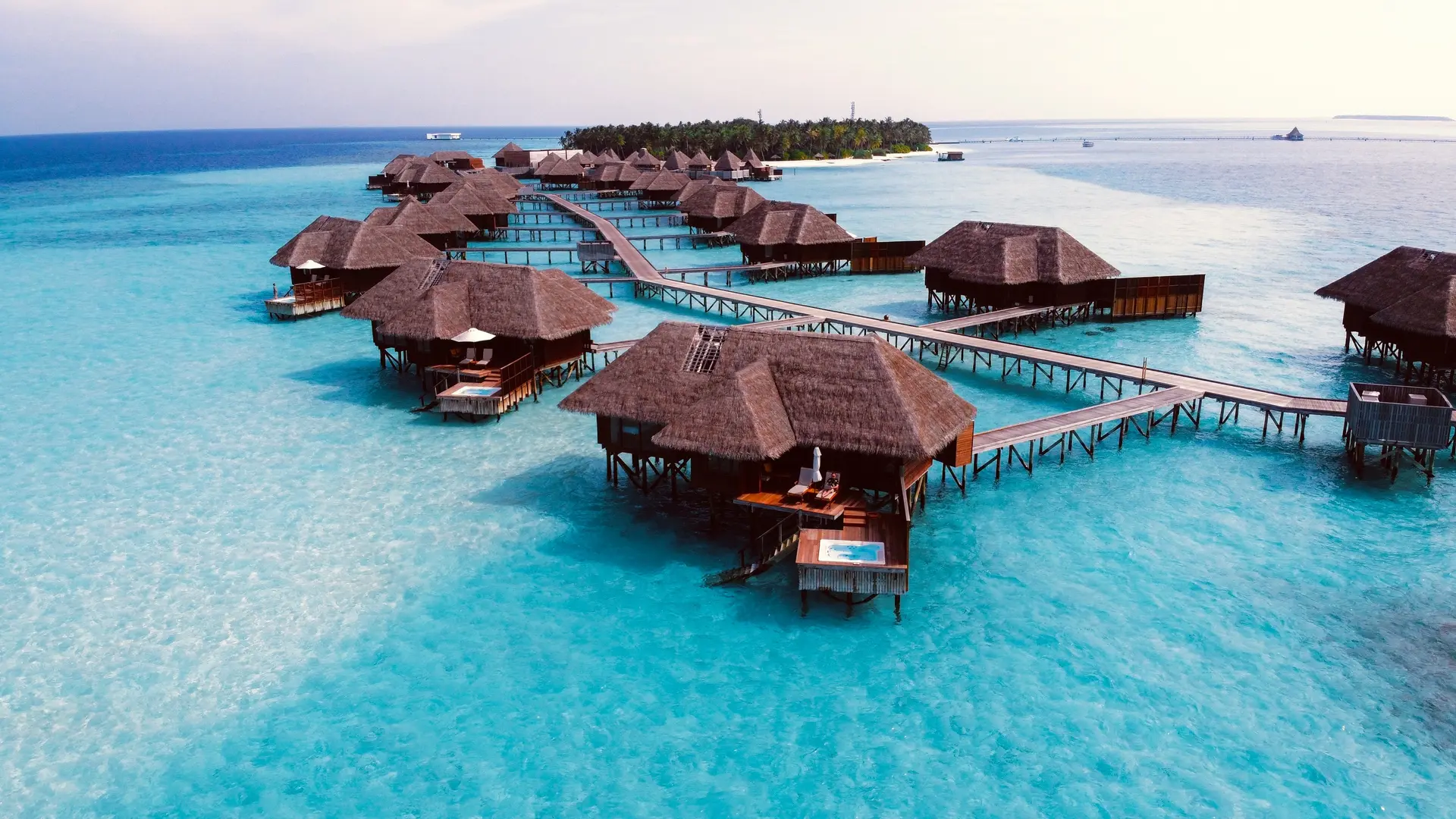
At 10:30 in the morning, a seaplane banks low over a necklace of coral atolls, each ring enclosing a lagoon so clear it looks Photoshopped that you finally understand the allure of all-inclusive Maldives vacation packages. This is how most Maldives holidays begin: not with a hotel check-in, but with a logistics puzzle that costs real money. Transfers, meals, excursions, taxes — the paradise comes itemized.
That’s why “all-inclusive” in the Maldives isn’t a luxury upsell. It’s often the only way to make the math tolerable.
But not all packages are created equal. Some quietly exclude half your actual expenses. Others bundle so much that you barely sign a receipt the entire week. The difference is thousands of dollars — and a very different vacation.
What “All-Inclusive” Actually Means in the Maldives
The phrase gets used loosely, and that’s where travelers get burned.
A basic all-inclusive package in the Maldives typically covers:
- Accommodation
- Three meals a day
- Standard alcoholic and non-alcoholic drinks
That’s the floor, not the ceiling. The real distinction is between standard all-inclusive and what many resorts now call premium or luxury all-inclusive.
The Hidden Costs Most Packages Don’t Cover
Transfers are the biggest surprise. A seaplane transfer with operators like Trans Maldivian Airways can cost $400–$700 per person round-trip. Speedboats are cheaper but only available for resorts near Malé.
Then there are:
- Excursions (snorkeling safaris, dolphin cruises): often $50–$150 each
- Premium wines and spirits
- Spa treatments
- Motorized water sports
Resorts like Kuramathi or Bandos offer entry-level packages, but once you start adding activities, the bill creeps up fast.
Premium All-Inclusive: Where It Gets Interesting
Some resorts have leaned into a different model — bundling nearly everything upfront.
Take Lily Beach Resort & Spa, one of the earliest adopters of “platinum all-inclusive.” Their package includes:
- Champagne and premium wines (including labels like Taittinger)
- Three excursions per stay
- Minibar restocked daily
- Access to multiple à la carte restaurants
Similarly, Constance Moofushi Maldives offers a package that includes guided snorkeling trips and a serious wine list curated by sommeliers — unusual for an island resort.
These aren’t small perks. They fundamentally change how you experience the trip. You stop calculating.
The Standout Maldives All-Inclusive Packages Right Now
There’s no single “best” option — it depends on budget, travel style, and tolerance for long transfers. But a few packages consistently stand out for delivering real value.
Soneva Jani: The High-End Benchmark
If money is secondary, Soneva Jani sets the standard.
Their “Soneva Unlimited” package includes:
- Unlimited dining across all restaurants
- Unlimited spa treatments
- Unlimited experiences, including diving
- Private seaplane transfers
Prices often exceed $2,000 per night per villa, and the package itself can add several hundred dollars per day per person. But for travelers who would otherwise pay à la carte, it can actually be rational.
This is less a holiday package and more a temporary lifestyle upgrade.
OZEN Life Maadhoo: Strong Mid-Luxury Value
Operated by Atmosphere Hotels & Resorts, OZEN Life Maadhoo offers one of the most balanced premium packages in the Maldives.
Their “INDULGENCE Plan” includes:
- Fine dining at specialty restaurants (not just buffets)
- Champagne available throughout the stay
- Complimentary spa treatments (often one per stay)
- Diving or snorkeling excursions
What stands out is the inclusion of underwater dining at M6m, their signature restaurant — an experience that can cost over $200 elsewhere.
Rates typically land in the $700–$1,200 per night range depending on season, making it one of the more accessible luxury-tier options.
Siyam World: All-Inclusive at Scale
Opened in 2021, Siyam World Maldives takes a different approach: scale and variety.
With over 10 restaurants and bars, plus:
- Unlimited access to a floating water park
- Horse ranch experiences (rare in the Maldives)
- Multiple excursion options included
Their all-inclusive plan is broad rather than ultra-luxury. It’s particularly appealing for families or groups who want activity without constant surcharges.
Prices can dip below $500 per night in shoulder seasons — aggressive for what’s included.
Centara Grand Island Resort: Reliable and Family-Friendly
Not glamorous, but dependable.
Centara Grand Island Resort & Spa offers one of the most transparent all-inclusive packages in the mid-range category:
- Daily excursions included
- Spa credit per stay
- Access to multiple dining venues without heavy restrictions
It’s also one of the few resorts that actively markets to families, with kids’ programs and larger villas.
The trade-off is style — it lacks the architectural drama of newer properties — but the value equation is clear.
When All-Inclusive Is Actually Cheaper
It sounds counterintuitive, but in the Maldives, all-inclusive can be the budget option.
A quick breakdown based on typical resort pricing:
- Lunch: $40–$80 per person
- Dinner: $80–$150 per person
- Drinks: $10–$25 each
- Excursions: $100+ per activity
Even a moderate daily spend can hit $250–$400 per person.
Multiply that over five nights, and suddenly a premium package that looked expensive upfront starts to look conservative.
According to Maldives tourism data, the average length of stay hovers around 5–6 nights, which is just long enough for these costs to compound meaningfully.
The Trade-Offs Nobody Mentions
All-inclusive packages solve financial uncertainty, but they introduce a different kind of constraint.
You are, in effect, committing to one island.
Limited Island-Hopping
The Maldives has over 170 resort islands, each with its own ecosystem and vibe. But once you check into an all-inclusive resort, you’re unlikely to leave it.
Day trips between resorts are rare and often discouraged. This isn’t Greece. It’s closer to a contained ecosystem.
Over-Programming vs. Doing Nothing
Some travelers find themselves trying to “maximize” their package — booking every excursion, ordering every cocktail, filling every hour.
That can turn a quiet beach holiday into a checklist.
And here’s the counterpoint: the Maldives doesn’t require activity to justify itself. A reef, a deck, and a few good meals can be enough. The best packages don’t push you to consume — they remove friction if you choose to.
Booking Smarter: Timing, Operators, and Real Deals
The best packages rarely come directly from resort websites.
Tour operators like Kuoni, Trailfinders, and Scott Dunn often negotiate bundled deals that include:
- International flights
- Transfers
- Upgraded meal plans
These can undercut direct bookings, especially from the UK and Europe.
Seasonality Matters More Than You Think
- Peak season (December–April): dry weather, highest prices
- Shoulder season (May and November): good value, occasional rain
- Low season (June–October): monsoon risk, but steep discounts
Some resorts drop prices by 30–40% during the low season while keeping all-inclusive benefits intact.
The weather risk is real, but it’s often overstated. Rain tends to come in short bursts rather than all-day washouts. Still, the data here is thin outside broad climate averages, and experiences vary widely by atoll.
A Different Way to Think About Maldives Packages
The mistake is treating all-inclusive as a luxury upgrade.
In the Maldives, it’s closer to infrastructure. A way to stabilize a trip that would otherwise be unpredictable and expensive.
The smartest travelers aren’t chasing the cheapest nightly rate. They’re asking a more practical question: How much will this island cost me once I’m stuck on it?
Answer that honestly, and the “best” package usually reveals itself. Not as the flashiest resort, but as the one where you stop thinking about the bill by day two — and never start again.