








Waking up with a racing mind, a tight chest, or constant worry can make the entire day feel overwhelming. Many people experience anxiety most intensely during the first hour after waking. The good news is that a consistent morning meditation routine for anxiety can help calm your nervous system, reduce stress, and create a more peaceful start to the day.
You do not need years of meditation experience or a complicated wellness routine. Even a few minutes of mindful breathing each morning can make a noticeable difference. Whether you are struggling with daily stress or looking for a natural way to manage anxious thoughts, this guide will help you build a practical meditation habit that actually works.
Why a Morning Meditation Routine for Anxiety Works
Morning is one of the most important times for mental health. Your brain is highly receptive after waking, which means your early thoughts often shape your mood for the rest of the day.
A regular meditation practice may help:
- Lower stress levels
- Reduce anxious thinking
- Improve focus and concentration
- Support emotional balance
- Increase self-awareness
- Improve sleep quality over time
When practiced consistently, meditation teaches your mind to respond to stress more calmly instead of reacting automatically.
Benefits of Morning Meditation for Anxiety
1. Reduces Morning Stress Hormones
Cortisol, often called the stress hormone, naturally rises in the morning. Meditation may help regulate the body’s stress response and reduce feelings of tension.
2. Creates Mental Clarity
Meditation helps clear mental clutter and allows you to begin your day with greater focus.
3. Improves Emotional Control
People who meditate regularly often become better at recognizing anxious thoughts before they spiral.
4. Encourages Better Breathing
Anxiety frequently causes shallow breathing. Meditation encourages slower, deeper breathing patterns that promote relaxation.
How Long Should You Meditate in the Morning?
One of the biggest myths about meditation is that you need 30 minutes or more.
The truth is simple:
Consistency matters far more than duration.
| Experience Level | Recommended Time |
|---|---|
| Beginner | 5 minutes |
| Intermediate | 10–15 minutes |
| Advanced | 20–30 minutes |
A 5 minute morning anxiety meditation can still provide meaningful benefits when practiced every day.
How to Build a Morning Meditation Routine for Anxiety
Step 1: Wake Up 10 Minutes Earlier
You do not need to wake up an hour earlier.
Simply create a small window of quiet time before:
- Checking emails
- Opening social media
- Reading news headlines
- Starting work
Protecting your first few minutes can significantly reduce mental overload.
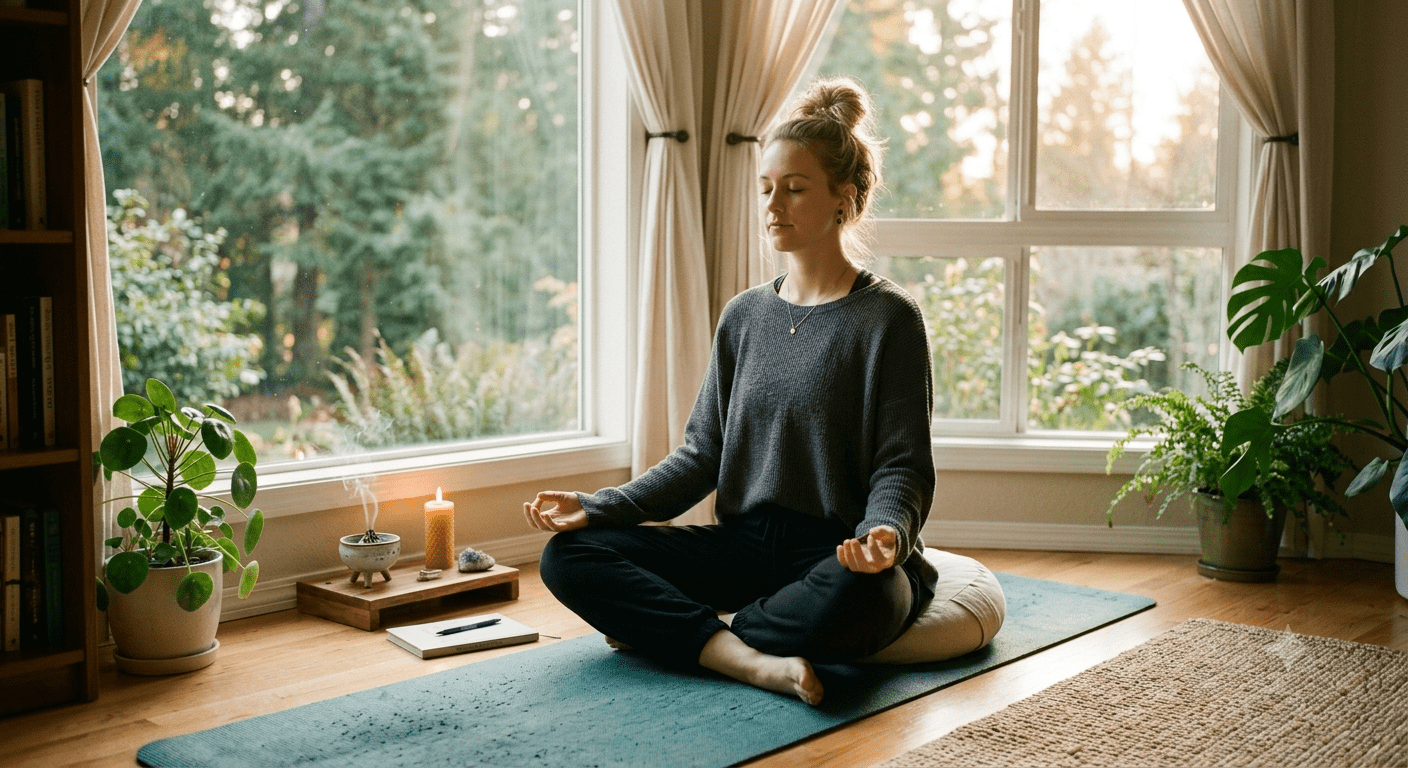
Step 2: Find a Quiet Space
Your meditation area does not need to be perfect.
Good options include:
- A chair near a window
- A corner of your bedroom
- A meditation cushion
- The edge of your bed
A consistent location helps train your brain to associate that space with calmness.
Step 3: Practice Deep Breathing
Try this simple breathing exercise:
- Inhale for four seconds.
- Hold your breath for four seconds.
- Exhale slowly for six seconds.
- Repeat five times.
This exercise helps activate the body’s relaxation response.
Step 4: Focus on Your Breath
Close your eyes and notice:
- Air entering your nose
- The movement of your chest
- The sensation of breathing
When thoughts appear, gently return your attention to your breath.
5 Minute Morning Anxiety Meditation Routine
If you have limited time, follow this simple routine:
Minute 1: Deep Breathing
Take slow, controlled breaths.
Minute 2: Body Awareness
Notice any tension in your body.
Minute 3: Breath Focus
Pay attention to each inhale and exhale.
Minute 4: Positive Intention
Choose one word for your day:
- Calm
- Peace
- Confidence
- Patience
Minute 5: Gratitude Practice
Think about one thing you appreciate.
This simple 5 minute morning anxiety meditation can help reduce stress before your day begins.
Morning Mindfulness for Stress Relief
Meditation becomes even more effective when combined with mindfulness habits.
Mindful Stretching
Spend two or three minutes stretching your body while focusing on your breathing.
Journaling
Write down:
- Three things you appreciate
- One goal for the day
- One positive affirmation
Mindful Tea or Coffee
Instead of scrolling your phone, pay attention to:
- The aroma
- The warmth
- The taste
These small habits support morning mindfulness for stress relief and improve emotional well-being.
Best Breathing Techniques for Morning Anxiety
Box Breathing
- Inhale for 4 seconds
- Hold for 4 seconds
- Exhale for 4 seconds
- Hold for 4 seconds
4-6 Breathing
- Inhale for 4 seconds
- Exhale for 6 seconds
Belly Breathing
Place one hand on your stomach and breathe deeply so your belly rises and falls.
These breathing exercises can calm the nervous system within minutes.
Creating a Calming Morning Routine for Mental Health
Meditation works best when combined with healthy morning habits.
A healthy morning routine may include:
- Drinking water immediately after waking
- Opening the curtains for natural sunlight
- Gentle stretching
- Meditation
- Journaling
- A nutritious breakfast
- Limiting social media
Together, these habits create a calming morning routine for mental health and help reduce daily anxiety.
Common Meditation Mistakes to Avoid
Expecting Instant Results
Meditation is a skill that develops with practice.
Trying to Stop Thoughts
The goal is not to eliminate thoughts but to observe them without judgment.
Being Inconsistent
Daily practice produces better results than occasional long sessions.
Starting Too Big
Begin with five minutes and gradually increase your time.
Frequently Asked Questions
Does morning meditation help anxiety?
Yes. Research suggests mindfulness meditation may help reduce anxiety symptoms and improve emotional regulation.
How long should I meditate for anxiety?
Beginners can start with five minutes daily and gradually increase their practice.
Is guided meditation good for anxiety?
Yes. Guided meditation can make it easier for beginners to stay focused and relaxed.
Can meditation replace therapy?
Meditation can support mental health but should not replace professional treatment when anxiety significantly affects daily life.
Final Thoughts: Start Small and Stay Consistent
The best morning meditation routine for anxiety is not the longest or most complicated one. It is the routine you can practice every day.
Start with five quiet minutes. Focus on your breathing. Let your thoughts come and go without judgment.
Over time, these small moments of stillness can become one of the most powerful tools for managing anxiety, reducing stress, and creating a calmer, healthier life.