










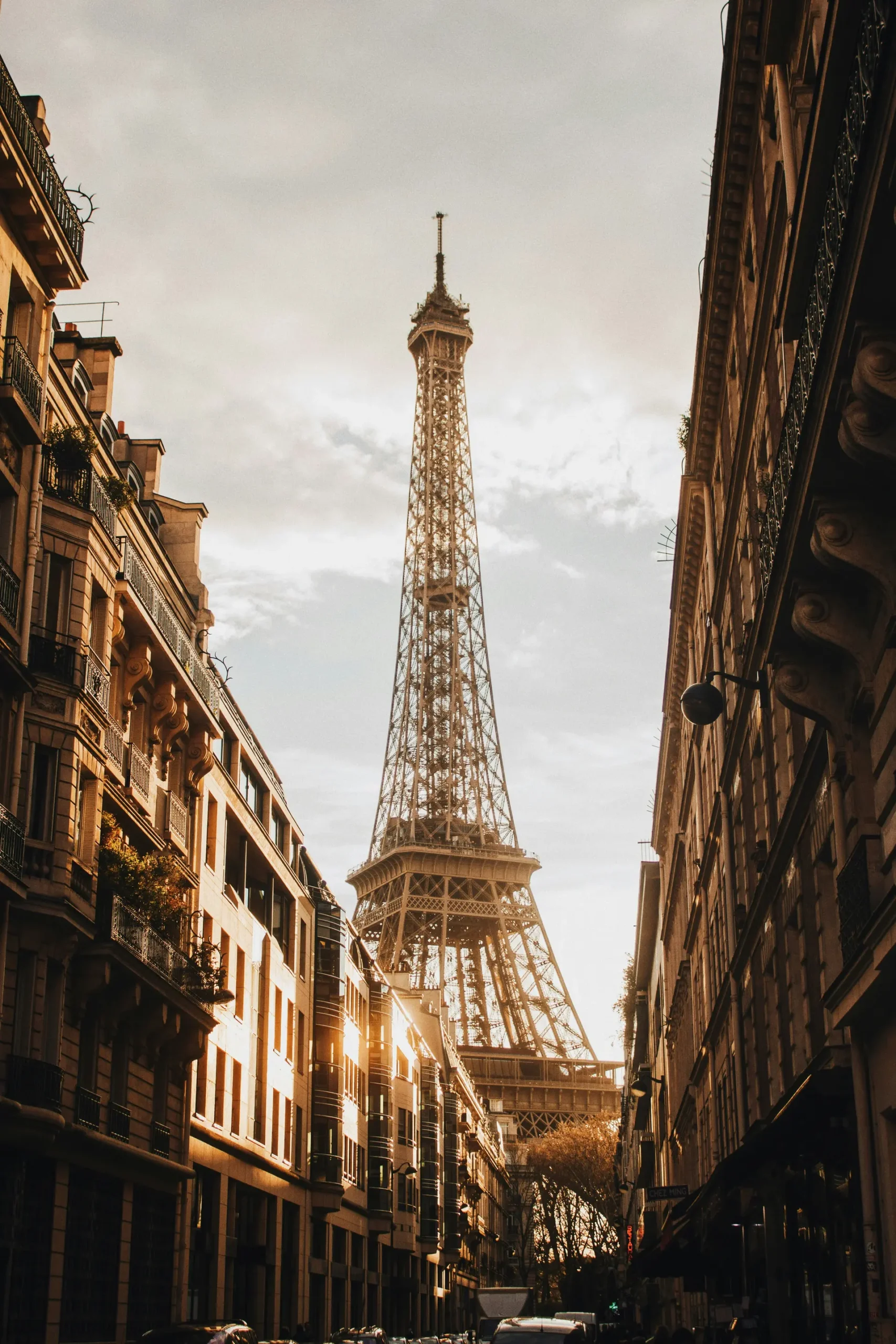
At 7:30 a.m., the Champ de Mars is almost quiet. Meanwhile, budget hotels near the Eiffel Tower are starting breakfast and check-outs. A few joggers cut across the lawns. Vendors set up small stands, and the iron lattice looms without its usual crowd. By 10, the sidewalks will be shoulder-to-shoulder. Which is exactly why staying nearby—within walking distance—feels like a luxury.
The trick is doing it without paying luxury prices. Paris is not a cheap city. In 2025, the average nightly hotel rate in central districts was €180–€250, according to STR Global. But “average” hides a lot. Within a 10–20 minute walk of the Eiffel Tower, some hotels still cost under €120 a night. In off-peak months, a few drop below €90.
Where to look beyond the 7th arrondissement
However, not all of them are worth your time. Some are barely functional. A few are genuinely good. The Eiffel Tower sits at the edge of the 7th arrondissement, one of Paris’s most expensive and residential districts.
Staying in the 7th is rarely budget-friendly. But step just across the Seine or a couple of metro stops away, and prices drop fast. Three zones matter most:
- The 15th arrondissement (southwest): quieter, residential, and reliably cheaper
- The 16th arrondissement (across the river): elegant, sometimes surprisingly affordable in older buildings
- The 14th arrondissement (a bit farther): not walkable for everyone, but excellent value with good metro links
Walkable distance and what it really means
Walking distance is subjective. For most travelers, anything within 1.5 kilometers (about a mile) counts. In Paris, that’s a 15–20 minute walk. Very manageable.
Hôtel de l’Alma
This is the rare case where you can stay in the 7th without blowing your budget. Hôtel de l’Alma often lists rooms between €110 and €150 per night if booked early. It’s not glamorous. Rooms are compact, décor leans dated.
But the location is hard to beat—about 10 minutes on foot to the tower. Rue Saint-Dominique nearby has bakeries and casual restaurants, which helps offset the lack of in-house amenities. Guests consistently mention cleanliness and staff friendliness in reviews on Booking.com and Google. For Paris, that combination at this price is not trivial.
A budget option near La Motte-Picquet–Grenelle
A misleading name—there’s no Louvre nearby—but a solid budget option. Expect prices around €90–€130 depending on the season. The rooms are small even by Paris standards. But they’re modernized, with updated bathrooms and reliable Wi-Fi.
It sits near La Motte-Picquet–Grenelle metro station, one of the best-connected hubs in this part of the city. From here, it’s about a 15-minute walk to the Eiffel Tower. Or three metro stops if your feet give out.
Ibis near Beaugrenelle
Ibis is a known quantity, part of the Accor group, which operates over 5,000 hotels globally. This particular property regularly prices between €120 and €160—slightly higher, but often includes breakfast. That matters. A typical Paris café breakfast (coffee, croissant, juice) can run €8–€12 per person.
Over a few days, that adds up. Rooms are simple but consistent. No surprises, which is exactly what some travelers want. This one sits near the Beaugrenelle shopping center, about 20 minutes walking distance.
Larger rooms and modern-commercial surroundings
Prices fluctuate widely, from €85 in winter to €140+ in summer. The trade-off is location feel. It’s less charming, more modern-commercial. But you gain larger rooms and proximity to supermarkets—useful if you’re trying to keep daily costs down.
What to watch for in low-priced rooms
Not every low price is a deal. Some are warnings. Paris hotel rooms average around 14 square meters (150 square feet), according to INSEE, France’s national statistics institute. Budget options can dip well below that. You might struggle to open a suitcase fully.
And then there’s noise. Buildings near major boulevards—like Avenue de Suffren or Quai Branly—can be loud well past midnight. Many older Parisian buildings either lack elevators or have ones that barely fit a person and a backpack. If you’re booking a cheaper hotel, check this detail carefully.
It sounds minor. It isn’t when you’re climbing five flights after a long day.
When to book for the best deals
Prices around the Eiffel Tower spike dramatically between May and September. During the 2024 Olympics, some hotels in the area tripled their rates. That’s an extreme case, but even in a normal year, summer sees increases of 30–50%. January and February are your best bets for bargains.
The weather is gray, yes. But the crowds thin, and prices follow.
Trading walking distance for atmosphere
Here’s the counterintuitive part: staying right next to the Eiffel Tower isn’t always the best move. Paris has one of the densest and most efficient metro systems in the world. According to RATP, the network averages over 4 million daily trips. That means you can stay farther out—say, in the 11th arrondissement—and still reach the tower in 20 minutes.
And you’ll pay less. Sometimes a lot less. Hotels like Hôtel Exquis or Hôtel Fabric offer rooms around €120–€170. The neighborhood is livelier, with bars, restaurants, and independent shops. Compare that to the 7th, which can feel quiet to the point of sterile after dark.
You trade walking distance for atmosphere. Many travelers end up preferring that.
Apartment-style rooms and changing regulations
Chains like Citadines and Adagio offer small apartment-style rooms. Near the Eiffel Tower, Citadines Tour Eiffel Paris often starts around €140 per night. Not the cheapest, but you get a kitchenette. Over several days, cooking even a few meals can offset the higher nightly rate.
Airbnb used to dominate this space, but regulations in Paris have tightened. As of 2024, primary residences are limited to 120 rental days per year. That has reduced supply somewhat and pushed prices up.
The experience of staying near the Eiffel Tower
Proximity to the Eiffel Tower is less about convenience and more about experience. Early mornings. Late-night walks when the tower sparkles every hour on the hour after sunset. Being able to step out and see it without planning your day around transit.
But you pay for that in space, comfort, or neighborhood character. Jean-Bernard Falco, a Paris-based hospitality consultant who has worked with boutique hotels across the city, put it bluntly in a 2023 interview with Les Échos: central Paris forces trade-offs. “You are always choosing between location, price, and size,” he said. “You rarely get all three.”
That holds especially true here.
Practical guidance for different trip lengths
If your trip is short—two or three days—stay as close as you can reasonably afford. The time saved matters more than squeezing out an extra €30 per night. If you’re staying longer, or you care about food and nightlife, consider stepping back a few arrondissements. You’ll get a fuller version of Paris.
And one practical note I learned the hard way: check if your room has air conditioning. Summers in Paris are getting hotter, and many budget hotels still don’t have it. In July 2025, the city hit 38°C (100°F) during a heatwave. A small room without AC becomes unbearable fast.
The Eiffel Tower isn’t going anywhere. Your comfort, on the other hand, is negotiable—and often, negotiable downward.