









The economic and environmental case for action
It is time for a realistic perspective on Artificial Intelligence in the workplace.
AI cannot replicate decades of nuanced industry experience to solve unprecedented challenges. It cannot offer authentic empathy during high-stress situations, build deep human relationships, or understand corporate humor. Despite the ongoing industry hype, AI cannot truly replace the unique value of a human employee.
However, for small business owners and solo founders, the dilemma rarely sits between hiring a human or using AI. Instead, the real choice is between doing every single task yourself or leaving critical tasks completely undone. This is where strategic AI integration becomes a game-changer.
But what does it actually take to architect a digital department that mirrors the output of a $50k full-time hire? In this guide, we break down the exact tech stack you need to automate your business operations.
1. Eliminate Manual Prompts with Core Automation
You wouldn’t hire a $50,000 employee only to micromanage them and explain the exact same daily task repeatedly. Yet, many business owners do exactly that with AI by manually typing the same prompts every day, which drains valuable time.
To build an efficient department, you must leverage built-in automation frameworks. Top-tier platforms offer systematic solutions:
- Google Gemini Advanced: Utilizing built-in automation utilities allows users to construct permanent, reusable prompt templates. For instance, you can hardcode your exact brand voice, target audience demographics, and preferred blog formatting into a single macro. When you need content, simply feed the tool a raw topic, and it delivers a tailored blog post instantly.
- OpenClaw: Taking automation beyond text generation, OpenClaw is an open-source autonomous agent framework that executes real-world operational tasks. It can manage local files, browse live web data, and draft outbound emails. While the tool itself is open-source and free, it requires stable hosting infrastructure—either deployed locally or configured through managed cloud services like Hostinger.
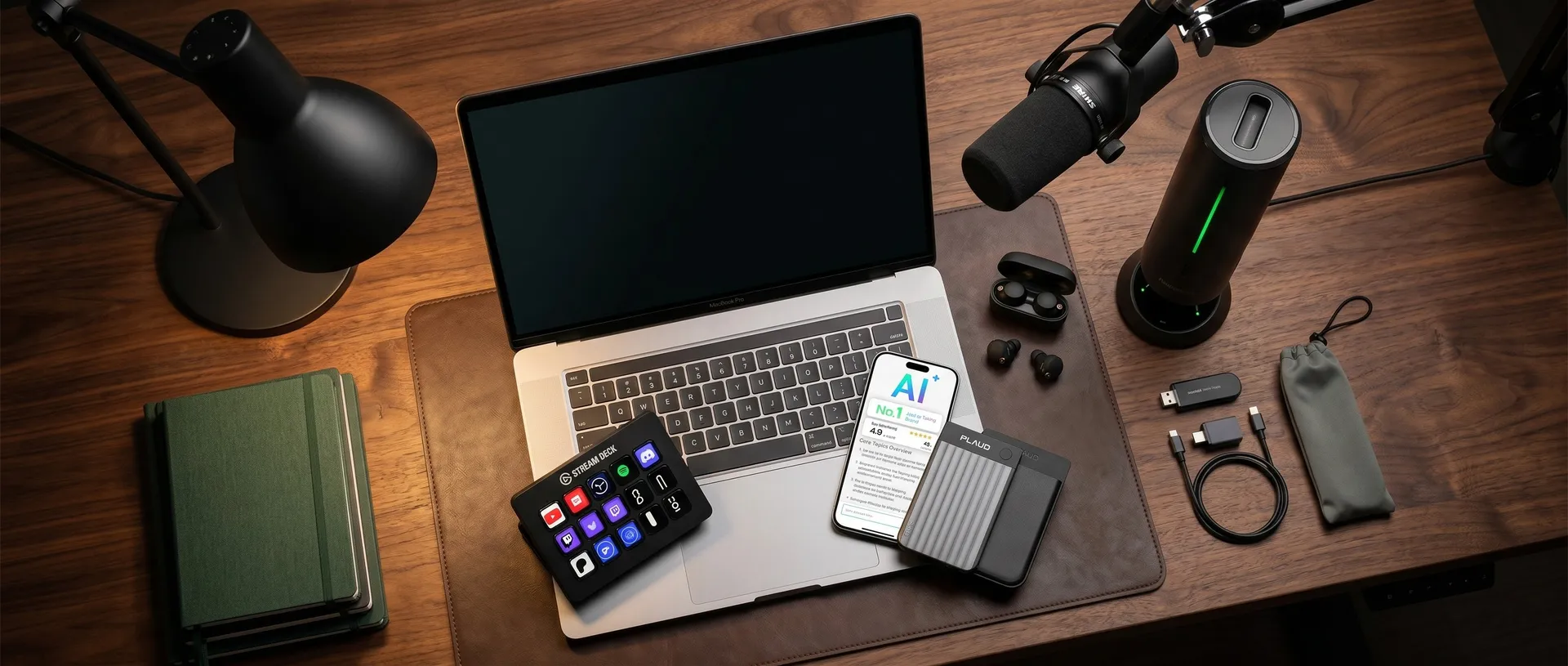
- Elgato Stream Deck: To bridge the gap between digital automation and physical execution, a desktop Stream Deck allows you to map complex digital workflows to hardware buttons. With a single physical press, you can trigger a macro that scrapes sales data from the past 30 days, compiles it into a clean PDF report, and emails it directly to your inbox.
2. Automating High-Impact Marketing Workflows
Marketing is a vital engine for growth, but it is notoriously time-consuming. Utilizing AI in marketing allows small businesses to scale their output exponentially while maintaining a lean budget.
- AI Web Architects (e.g., Hostinger AI Website Builder): By feeding an AI website generator a structured set of prompts regarding your niche and design preferences, you can generate a fully deployed, responsive website packed with functional copy in minutes. While human fine-tuning is required, it slashes development timelines significantly.
- Canva AI: Design workflows become friction-free with generative graphic suites. Describing your visual concept in plain English allows the engine to output high-converting social media templates, pitch decks, and brand presentations.
- Opus AI (Opus Clip): Repurposing long-form video assets into micro-content is essential for modern organic growth. This tool automatically analyzes long videos, extracts high-impact moments, adds dynamic captions, and formats them into social-media-optimized shorts or reels with a single click.
- Hostinger Horizons: For businesses needing custom digital products or internal tools, “vibe coding” platforms like Hostinger Horizons offer a revolutionary path. Even with zero traditional engineering knowledge, founders can build functional web applications, ranging from custom CRMs to client onboarding portals, using conversational code orchestration.
3. Streamlining Administrative Overhead
Administrative tasks can severely bottleneck a founder’s daily productivity. Offloading these workflows to dedicated digital agents frees up hours of high-level strategic time.
- Notion AI Agents: Notion has served as the central workspace repository for businesses worldwide. With its advanced AI agent integrations, users can query their entire internal database, command the system to vet inbound leads, or initiate automated customer outreach campaigns based on stored internal data.
- Zapier Central: Zapier offers an expansive automation ecosystem connecting marketing, sales, IT, and customer support. Its specialized AI agents act as an operational bridge, allowing models like ChatGPT and Gemini to communicate seamlessly across thousands of distinct third-party apps, orchestrating cross-platform business workflows autonomously.
- AI Voice Note-Takers (e.g., Fathom / Otter.ai): Manual note-taking during meetings is an operational bottleneck. Deploying an AI voice-and-video meeting assistant automatically captures transcripts, highlights key action items, and syncs summaries directly to your project management boards, completely removing human error from corporate documentation.
Source: Tech Radar Pro
AIFlick Editor’s Note: The transition from simple conversational prompting to “Agentic AI Operations” is redefining the economics of starting a business in Tier-1 markets. You don’t need a massive venture capital runway to scale operations anymore. By investing less than $100 a month into a well-orchestrated AI tool stack, solo entrepreneurs can build a highly responsive, automated operational department that punches far above its weight class.